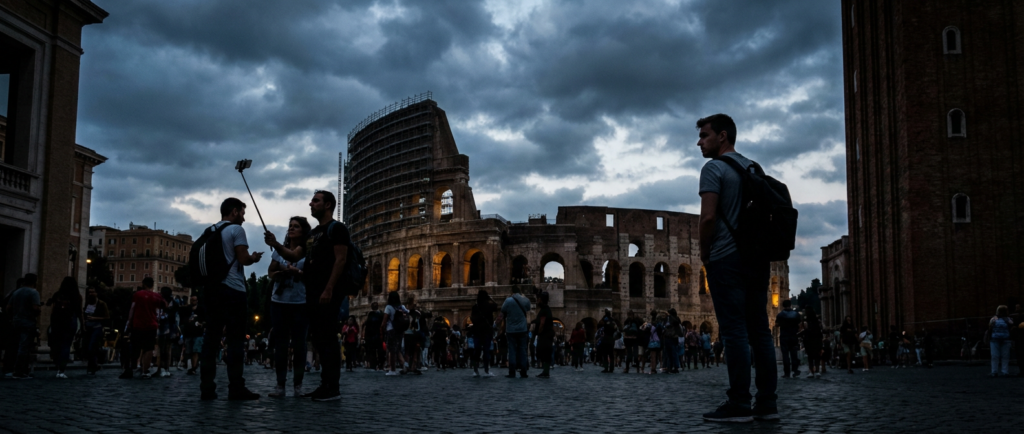
The Mona Lisa Scrum: When Art Becomes a Contact Sport
Standing in the Louvre at 2 PM on a Tuesday, I watched a woman literally climb over a stroller to get her selfie with the Mona Lisa. The painting sits behind bulletproof glass, surrounded by a velvet rope barrier that keeps you roughly fifteen feet away. You can see it better in a coffee table book.
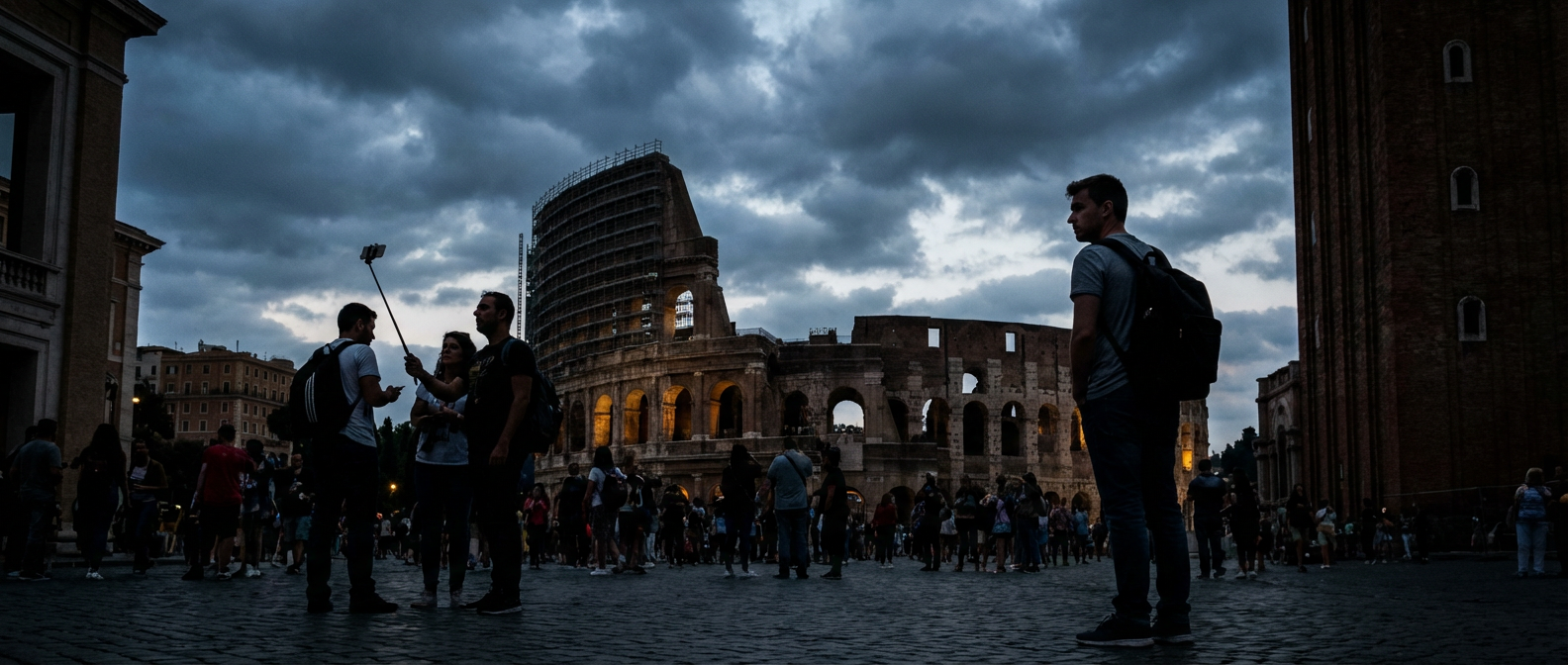
The walk there tells the real story. You’ll snake through Room 711, past Veronese’s massive “Wedding Feast at Cana” that actually deserves your attention, following red signs and crowds moving like salmon upstream. The holding pen in front of Da Vinci’s masterpiece resembles airport security more than cultural appreciation. Everyone holds phones above their heads, creating a forest of screens between you and the art.
Here’s what my notebook says about that visit: “12 minutes in line, 30 seconds of actual viewing time, left feeling like I’d been pickpocketed by tourism itself.” The Louvre holds 35,000 other works. Most tourists see exactly one.
Skip the Mona Lisa mob scene. Head straight to the Islamic Art wing or spend time with the Mesopotamian artifacts. These sections stay blissfully quiet, and you can actually think about what you’re seeing instead of fighting for photo angles.

Times Square: Where Local New Yorkers Fear to Tread
My subway map from a recent New York trip shows something revealing. Every local I asked for directions physically recoiled when I mentioned Times Square. “Why would you want to go there?” became the standard response, delivered with the same tone you’d use to ask why someone would drink expired milk.
The reality hits you at 42nd Street station. The crowd carries you upward like a human conveyor belt, and you emerge into what feels like a shopping mall that forgot it was supposed to be a city. Chain restaurants charge $25 for mediocre pasta while costumed characters hustle tips for photos. The famous “energy” everyone talks about? That’s just overstimulation mixed with exhaust fumes.
I spent exactly seventeen minutes there, long enough to realize that authentic New York exists everywhere except this particular intersection. The neon signs advertise the same brands you’ll find at any suburban strip mall. Street vendors sell “I Heart NY” t-shirts made in Bangladesh to tourists from Ohio who think they’re experiencing something uniquely metropolitan.
Real New York happens in neighborhoods like Astoria or Red Hook. Take the Q train to Brooklyn Bridge-High Street and walk across the bridge instead. You’ll get better skyline views, actual local atmosphere, and space to breathe.
Hollywood Boulevard: The Boulevard of Broken Dreams and Overpriced Parking
Hollywood Boulevard promised glamour and delivered a sticky sidewalk dotted with stars I’d never heard of. My first clue should have been the $30 parking fee at 11 AM on a Wednesday. The second clue: the overwhelming smell of cleaning chemicals mixed with something I couldn’t identify and didn’t want to.
The Walk of Fame stretches for miles, but most tourists cluster around the same few blocks near TCL Chinese Theatre. You’ll find Mickey Mouse costumes that smell like they’ve survived several summers, aggressive street performers demanding payment for photos you didn’t want, and souvenir shops selling the same mass-produced Hollywood memorabilia.
The handprints and footprints at the Chinese Theatre create a curious scene. Families crouch over concrete impressions, trying to match their hands to celebrities’, while tour guides shout facts about movies from 1987 that nobody asked about. The whole experience feels like visiting a cemetery for dead entertainment.
Los Angeles has incredible culture, but you won’t find it here. Drive twenty minutes east to the Arts District, where actual artists work in converted warehouses and galleries show contemporary work that matters. Or head to Griffith Observatory for the Hollywood sign view without the Hollywood Boulevard headache.
Dubai’s Mall of the Emirates: Shopping as Tourism
Dubai positions itself as a luxury destination, but scratch the surface and you’ll find a city built around consumption rather than culture. The Mall of the Emirates shows this perfectly. It has an indoor ski slope, which sounds impressive until you realize you’ve flown thousands of miles to do something you could do better in Colorado.
The mall sprawls across multiple floors and zones, each designed to separate tourists from their money as efficiently as possible. Luxury brands charge airport prices while the food court has the same international chains you’d find in suburban America. The artificial snow falls continuously in the ski area, a monument to environmental absurdity that somehow passes for entertainment.
What struck me most was the absence of local character. Every surface gleams with marble and gold accents, but nothing tells you where you actually are. The experience could happen anywhere with enough air conditioning and investment capital. Even the “luxury” feels generic, like someone’s idea of what wealth should look like rather than actual elegance.
Dubai’s old souks tell a different story. The Gold Souk and Spice Souk offer genuine cultural experiences where negotiation matters and local vendors sell products that reflect the city’s trading heritage. Skip the manufactured luxury and find the authentic Dubai that existed before the skyscrapers.
The Freedom to Skip What Everyone Else Does
These destinations succeed because of momentum, not merit. Millions visit because millions have visited, creating a self-perpetuating cycle that has little to do with actual value. Tourism marketers understand this psychology perfectly, which is why they sell experiences rather than places.
The best travel moments happen when you ignore the guidebook’s greatest hits and follow your curiosity instead. That perfect breakfast spot I mentioned? I found it because I got lost walking away from a famous landmark that disappointed me. The notebook full of bus schedules is freedom from tour groups and predetermined itineraries.
Your time and money are finite resources. Spending them on overcrowded, overpriced experiences that deliver less than they promise means missing opportunities for genuine discovery. Every hour you save skipping tourist traps is an hour you can spend finding something actually worth remembering.
What destinations have left you feeling like you missed the real story while chasing the famous version? I’d love to hear about your own tourist trap discoveries and the unexpected places you found instead.