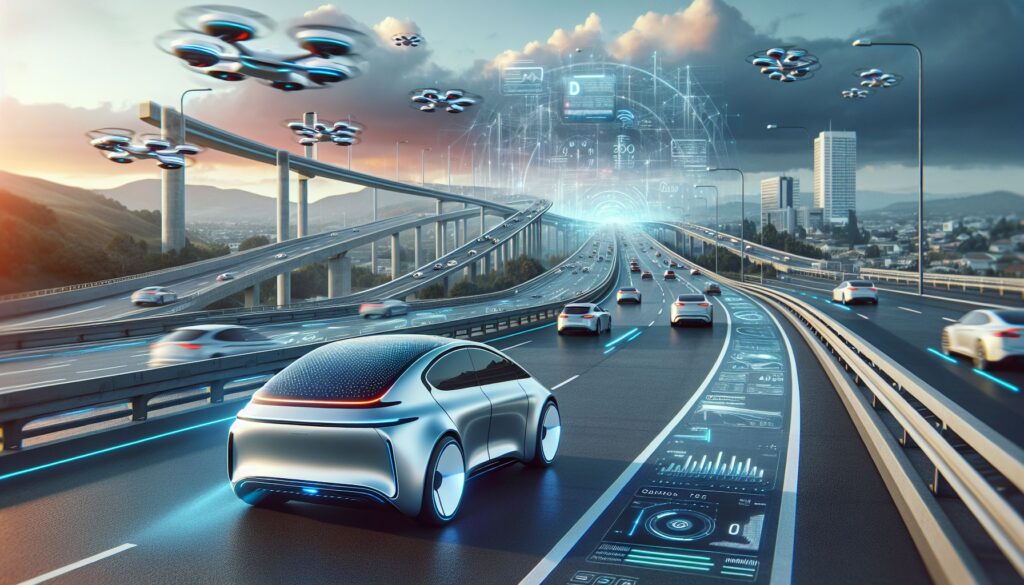
Introduction: A Driverless Future?
Imagine a world where your morning commute turns from a mundane routine into a chance to read, nap, or even hold a conference call while your car handles the rush hour traffic. Thanks to advances in artificial intelligence (AI), this vision of a driverless future is quickly becoming reality. Autonomous vehicles (AVs) are about to disrupt how we think about transportation and change our relationship with mobility completely. In this post, I’ll walk you through the latest breakthroughs in AV technology, explore what they could mean for society, and look at the key challenges we still need to solve.
The Rise of Autonomous Vehicles
Understanding the Basics of AV Technology
At its core, an AV is a vehicle equipped with technologies that let it navigate and perform driving tasks with minimal or no human intervention. These vehicles rely on a complex mix of hardware and software, using a suite of sensors including cameras, LIDAR, radar, and ultrasonic sensors, plus advanced machine learning algorithms. Together, these components allow an AV to understand its environment, make decisions, and take action in real-time.
Recent Breakthroughs in AI for AVs
The past few years have brought major advances in AI-driven autonomous systems. Many leading tech firms are now using machine learning models that dramatically improve an AV’s ability to recognize objects, predict behavior, and make split-second driving decisions. Deep reinforcement learning techniques have been game-changing, teaching AVs how to handle complex driving scenarios by running through countless variations of road conditions and traffic situations. Neural networks have also boosted an AV’s capacity for accurate and reliable decision-making in ways that honestly surprised even the engineers building them.
The Role of Big Data and Connectivity
The successful operation of AVs depends heavily on big data analytics and connectivity infrastructure. Autonomous vehicles create massive amounts of data from sensor inputs to operational metrics that need to be processed and analyzed in real-time. Cloud computing and edge computing technologies allow for rapid handling of this data, ensuring timely updates and system responsiveness. Vehicle-to-everything (V2X) communication protocols let AVs talk to other vehicles and infrastructure, providing real-time traffic information and improving safety and efficiency.
Autonomy’s Potential Impacts on Society
Redefining Urban Mobility
One of the most exciting possibilities with AVs is how they could redefine urban mobility. As AVs become more common, traffic congestion could drop significantly, making commutes smoother and faster. Autonomous taxis, rideshare services, and public transportation could offer more convenient and affordable mobility solutions, reducing the need for personal car ownership. This shift could transform urban landscapes, with cities converting parking lots and garages into community spaces. Though I have to wonder if we’re being a bit optimistic about how quickly people will give up their cars.
Environmental Benefits
The environmental impact of AVs is worth considering seriously. By optimizing routes and driving behaviors, AVs can improve fuel efficiency and lower emissions, especially when combined with electric vehicle (EV) technology. Integrating AVs within public and shared transportation systems could further reduce the number of vehicles on the road, leading to less air pollution and better urban air quality.
Safety: A New Paradigm
Safety is perhaps the most compelling reason to pursue autonomous driving technology. Human error causes most road accidents. By removing this factor, AVs could drastically reduce traffic fatalities and injuries. Advanced safety features like automated braking and collision avoidance work with precision and reliability that humans simply can’t match. In an AI-driven transportation system, the roads really could become safer for everyone.
Roadblocks and Challenges
Technological Hurdles
Despite tremendous progress, several technological hurdles must be overcome before AVs can achieve widespread adoption. Developing reliable AI models that can handle unpredictable human behavior and navigate complex environments is incredibly difficult. Edge cases, those rare and unusual scenarios, pose a huge challenge for ensuring AV safety. Continuous advancements in AI, sensor technology, and simulation environments are absolutely necessary to address these issues.
Legal and Regulatory Challenges
The legal and regulatory landscape presents another major obstacle to AV proliferation. Policymakers must tackle questions of liability in accidents, privacy concerns related to data collection, and cybersecurity threats. Establishing comprehensive regulations and industry standards is necessary to create a framework that both encourages innovation and ensures public safety. Frankly, the legal system moves much slower than technology development, which creates real problems.
Societal Acceptance and Ethical Considerations
Gaining societal acceptance for AVs involves overcoming both public skepticism and ethical considerations. Transparency and public education are key to building trust in autonomous technology. Ethical dilemmas, such as decision-making in critical situations involving the safety of passengers versus pedestrians, need to be addressed. Ongoing dialogue and collaboration among technologists, ethicists, and policymakers are necessary to navigate these complex issues.
Conclusion: The Road Ahead
The path toward a driverless future has plenty of challenges, but the potential benefits are too significant to ignore. As artificial intelligence continues to advance and integrate into autonomous vehicles, we’re getting closer to a transportation revolution with major benefits for society and the environment. By tackling the technological, regulatory, and societal challenges directly, the dream of a driverless future can become reality rather than just wishful thinking. Tomorrow’s roads should be smarter, greener, and safer, showing us what AI can really accomplish when it takes the wheel.