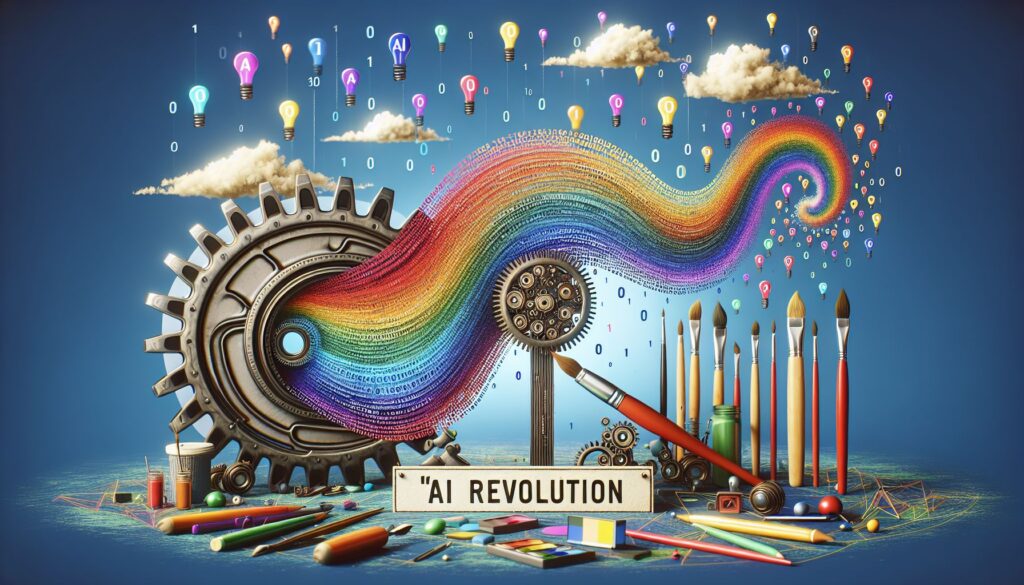
We’re living through something pretty remarkable right now. Artificial intelligence is changing how we work, how we think, and maybe most surprisingly, how we create. I’ve been watching this shift happen across everything from poetry and painting to music composition and marketing campaigns. AI isn’t just another tool anymore—it’s becoming a creative partner. And honestly? That’s both exciting and a little unsettling. Let me walk you through what I’ve been seeing in this space.
The Rise of AI Creatives
Just a few years ago, creativity felt like the one thing machines could never touch. Art, music, writing—these were human territories. But AI has gotten really good at mimicking how we think, spotting patterns, and making connections. Now it’s doing something I didn’t expect: it’s getting creative.
-
Art and Design: I’ve spent hours playing with programs like DeepArt and Google’s DeepDream. These neural networks take your images and transform them into something totally unexpected—sometimes beautiful, sometimes bizarre, always interesting. What I love is how artists are using these tools. They’re not just pushing a button and calling it done. They set up the rules and let the AI surprise them with what comes out.
-
Music Composition: This one blew my mind. Platforms like Amper Music and OpenAI’s MuseNet let you generate full compositions across different genres. I watched a friend who can barely play guitar create a jazz piece that actually sounded good. These tools aren’t just copying existing songs—they’re finding new combinations of rhythms and harmonies that I wouldn’t have thought of.
-
Writing and Literature: Then there’s GPT-3 and its siblings. Sure, they’re great for practical stuff like coding help, but I’ve seen them write poetry that gave me chills and short stories that kept me reading. Game developers are using them to create richer narratives. It’s like having a writing partner who never gets tired and always has ideas.
How AI Is Shaping the Future of Creative Work
Democratization of Creation
Here’s something I find really exciting: AI is making creativity more accessible. You don’t need years of art school or music theory to start creating something meaningful. I’ve seen kids with no formal training make incredible digital art, and my neighbor who always wanted to write music finally can. It’s opening up creative expression to people who might never have had the chance otherwise.
Enhancing Human Creativity
The best part? AI isn’t replacing human creativity—it’s supercharging it. Instead of spending hours on technical grunt work, creators can focus on the big ideas. I know architects who use AI to visualize complex buildings and filmmakers who let AI handle the tedious parts of editing. It frees up mental space for the stuff that really matters.
Collaboration Between Humans and Machines
Some of the coolest projects I’ve seen treat AI like a creative partner. Take “The Next Rembrandt”—researchers fed an AI system everything they could about Rembrandt’s techniques and style, then had it create a brand new painting that looked like it could have come from the master himself. It wasn’t about replacing Rembrandt, but about continuing a conversation across centuries.
Cyber-Creativity: Making the AI Sing
What really gets me excited is AI’s ability to find patterns and connections that humans miss. It can process massive amounts of information and spot relationships that might take us years to discover. When you combine that pattern recognition with human intuition and emotion, you get something entirely new.
I think of it as AI giving creators a new kind of microscope—one that reveals hidden connections in data, art, music, and stories. It’s not just about making things faster or easier. It’s about discovery.
The Challenges and Concerns
But let’s be honest—this isn’t all sunshine and algorithmic rainbows. There are some real problems we need to figure out.
The Question of Authorship
Who owns an AI-generated painting? The person who wrote the prompt? The developer who built the AI? The AI itself? I’ve seen artists struggle with this question, especially when money gets involved. We need clearer rules about credit and ownership when humans and machines collaborate.
Quality Control and Ethical Considerations
AI systems learn from the data we feed them, which means they can pick up our biases and blind spots. I’ve seen AI generate content that was problematic or just plain wrong. There’s ongoing debate about how much human oversight we need and how to make sure these tools help rather than harm our creative culture.
The Risk of Homogenization
Here’s what worries me most: what if everything starts looking the same? If we’re all using similar AI tools trained on similar datasets, will we lose the beautiful diversity of human creativity? I’ve already noticed some AI-generated art starting to have a similar feel across different creators.
Conclusion: Embracing a Collaborative Future
After watching this technology develop and trying it myself, I’m convinced that the key is thinking of AI as a creative partner, not a replacement. The best results I’ve seen come from humans and machines working together, each bringing their unique strengths to the table.
I think we’re heading toward a future where the most interesting art comes from these human-AI collaborations. Musicians working with AI composers, writers bouncing ideas off language models, visual artists exploring AI-generated possibilities. It’s not about losing our humanity in creativity—it’s about expanding what human creativity can be.
Whether you’re an artist curious about these new tools or someone building them, we’re in the middle of something big. The combination of human creativity and artificial intelligence is already changing what’s possible in art and culture. And honestly? We’re just getting started.