
The Numbers Actually Got Better This Time
I spent three months in Barcelona last year. Not a vacation. A stay. And somewhere between week four and week eight, when I stopped taking photos of everything and started knowing which metro stop had the best churros, I realized something had shifted in how I was booking my side trips around Europe. The fares I was seeing weren’t the nightmare prices of 2022 or even 2023. They were genuinely cheap. Confusingly, frustratingly, almost suspiciously cheap.

Turns out it wasn’t in my head. Real airfares in the US dropped 4.2 percent in real terms during the third quarter of 2025 compared to the same period the year before. That’s not inflation adjustment noise. That’s actual money staying in your pocket. The trunk routes took the biggest hits because Frontier and Spirit started making noise about serious competition after their merger talks, and suddenly everyone else got nervous about their pricing. It’s the kind of thing that sounds boring until you realize it means your quarterly escape from winter just became fifteen percent cheaper than you thought it would be.
Google Figured Out the Future of Fares
Here’s the thing about booking budget flights: you never know if you’re buying at the dip or the peak. I’ve spent hours refreshing pages, reading contradictory advice, second-guessing myself into oblivion. The anxiety of “what if prices drop tomorrow” is almost worse than paying more in the first place.
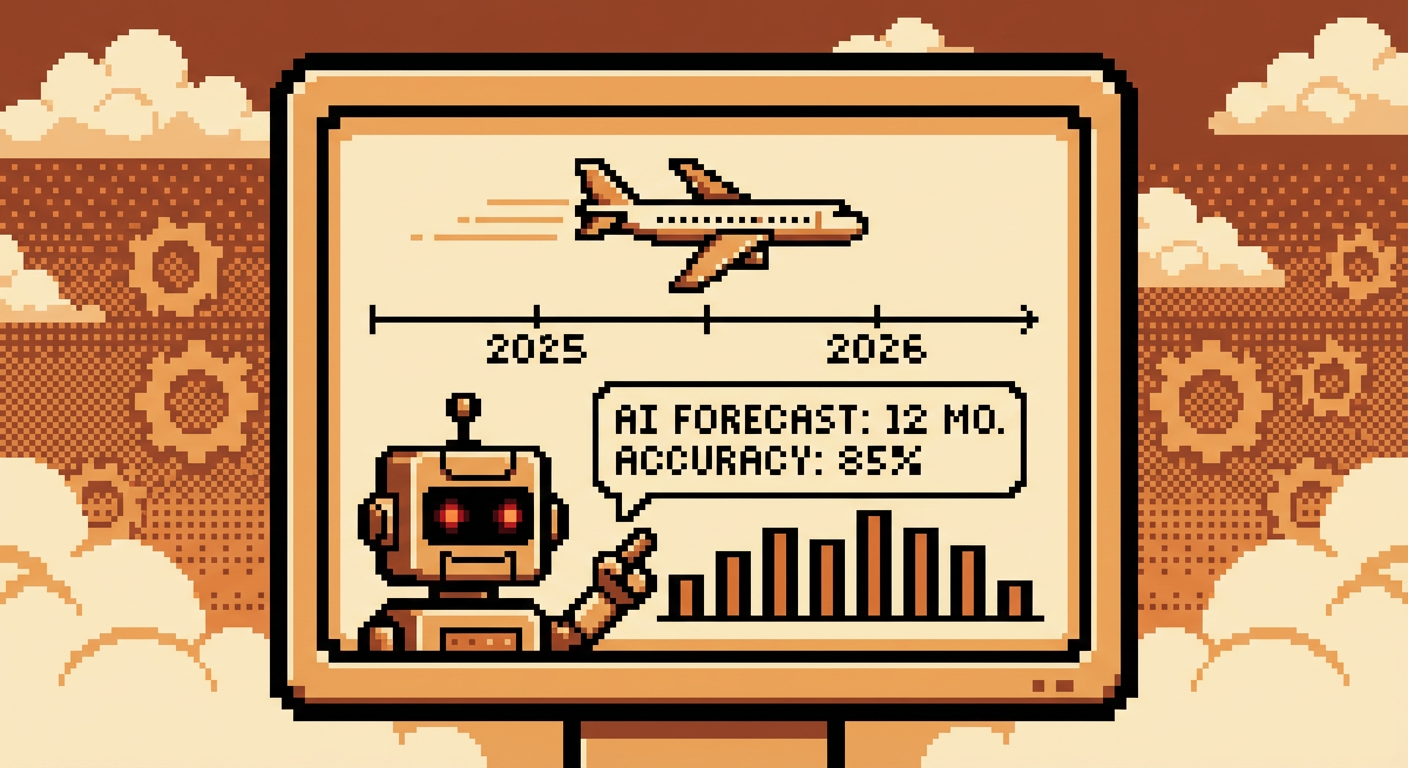
Then Google Flights AI price prediction tool got actually good. Not the vague “prices tend to go down on Tuesdays” good. The real thing. The new version, which rolled out in late 2025, uses machine learning to forecast where fares are headed up to a full year in advance with 85 percent accuracy. That’s up from 70 percent on the previous model. Eighty-five percent means it’s wrong one time out of seven. You can work with those odds.
I tested it obsessively for weeks. I’d look at a route from Barcelona to Krakow. The tool would say fares would drop about 12 percent in the next three weeks. I’d wait. They’d drop 14 percent. I’d look at another route, it said hold off, and I booked anyway out of stubbornness. Prices went up another 20 percent. The tool wasn’t just accurate. It was right in a way that felt almost unfair to airlines.
The Ultra-Low-Cost Carriers Stopped Playing Around
Ryanair carried 200 million passengers in fiscal year 2025. Two hundred million. They’re now officially the largest international airline in the world by sheer passenger numbers, and they hit that mark nearly three years ahead of their own projections. That’s not just volume. That’s a permanent shift in how people move around the globe.
But Ryanair isn’t alone anymore, and that’s the part that actually matters for your wallet. Wizz Air went aggressive in 2025, particularly out of Abu Dhabi. They launched fourteen new routes across Africa and Central Asia, positioning themselves as the genuine alternative for anyone traveling from or through the Middle East. That’s not a regional play. That’s a network expansion that directly competes with Ryanair’s European dominance in ways we haven’t seen before.
What this means on the ground: competition between ultra-low-cost carriers is real now. When I was booking that Barcelona trip, I compared Ryanair, Wizz Air, and smaller carriers I’d never heard of a year prior. The prices were close enough that I could choose based on schedule or baggage policy instead of just pure cost. That freedom didn’t exist in 2023. It barely existed in 2024.
Fare Alerts Actually Moved the Needle
I’m obsessive about notifications. Most of them are garbage. Marketing spam disguised as helpful updates. But I’ve kept Going cheap flights fare alerts on my phone for over a year now. The service tracks price drops across thousands of routes and fires an alert when something genuinely cheap appears.
According to their 2025 transparency report, subscribers saved an average of 550 dollars per international round trip by using their alerts. That’s not pennies. That’s not the savings from using incognito mode in your browser or flying on Tuesday instead of Friday. That’s an actual structural advantage that comes from having a machine watching prices constantly on your behalf.
Here’s what I noticed using it from abroad: the alerts work better when you’re flexible. The people saving the most weren’t hunting for a specific route on specific dates. They were watching for deals and then reshaping their plans around them. One month I got an alert for flights to Sofia. I’d never planned to go. I booked the ticket for forty euros and spent a long weekend eating shopska salad and wandering through Soviet-era architecture. I wouldn’t have gone if I was watching for “deals on my preset routes.” But because the tool surfaced the absurdity of that price, I went.
What This Actually Means for How You Travel Now
Budget travel in 2026 isn’t about tricking the system anymore. It’s about using better information and having real competition working in your favor. Accurate AI price forecasting, ultra-low-cost carriers that are genuinely competing instead of cooperating, and alert systems that catch the moments when prices drop below normal, together these represent something fundamentally different from how this worked even two years ago.
I’m not saying it’s easy. You still need patience. You still need flexibility. You still need to understand that the absolute cheapest option sometimes means flying at six in the morning or standing in a standby line or eating airline cheese sandwiches. But the structural barriers to affordable travel have genuinely lowered. The luck factor has shrunk.
The Barcelona trip taught me that you don’t need to visit places anymore. You can stay in them. And that changes what you’re willing to spend to get there. If a flight costs a hundred euros more, it’s a bigger deal when you’re staying six weeks instead of six days. That pressure is exactly what’s driving the shift we’re seeing in the market right now. Airlines adapted by competing harder. The ultra-low-cost carriers adapted by expanding faster. The technology adapted by getting smarter.
Have you tried the updated price prediction tool? Are you using fare alerts differently? I’m genuinely curious whether what I’m seeing in Europe matches what people are experiencing booking domestic flights or longer routes. Drop a note in the comments about your actual experience with these tools, not the ads or the blog posts you’ve read about them.