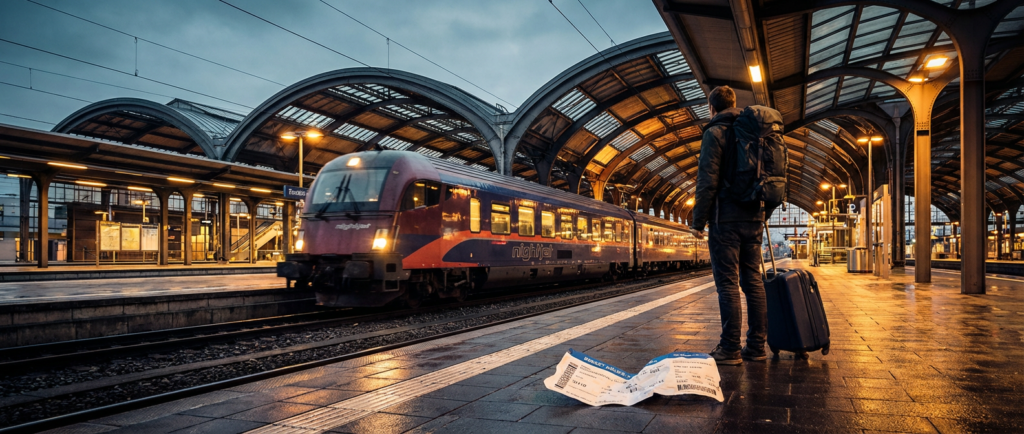
The Amsterdam Awakening
I’m writing this from a cramped corner table in a Prague café, nursing my third espresso and staring at a ticket stub that changed everything. Twenty-four hours ago, I boarded European Sleeper’s inaugural Amsterdam-Prague service with the skepticism of someone who’s endured too many Ryanair boarding scrums and overpriced airport sandwiches.
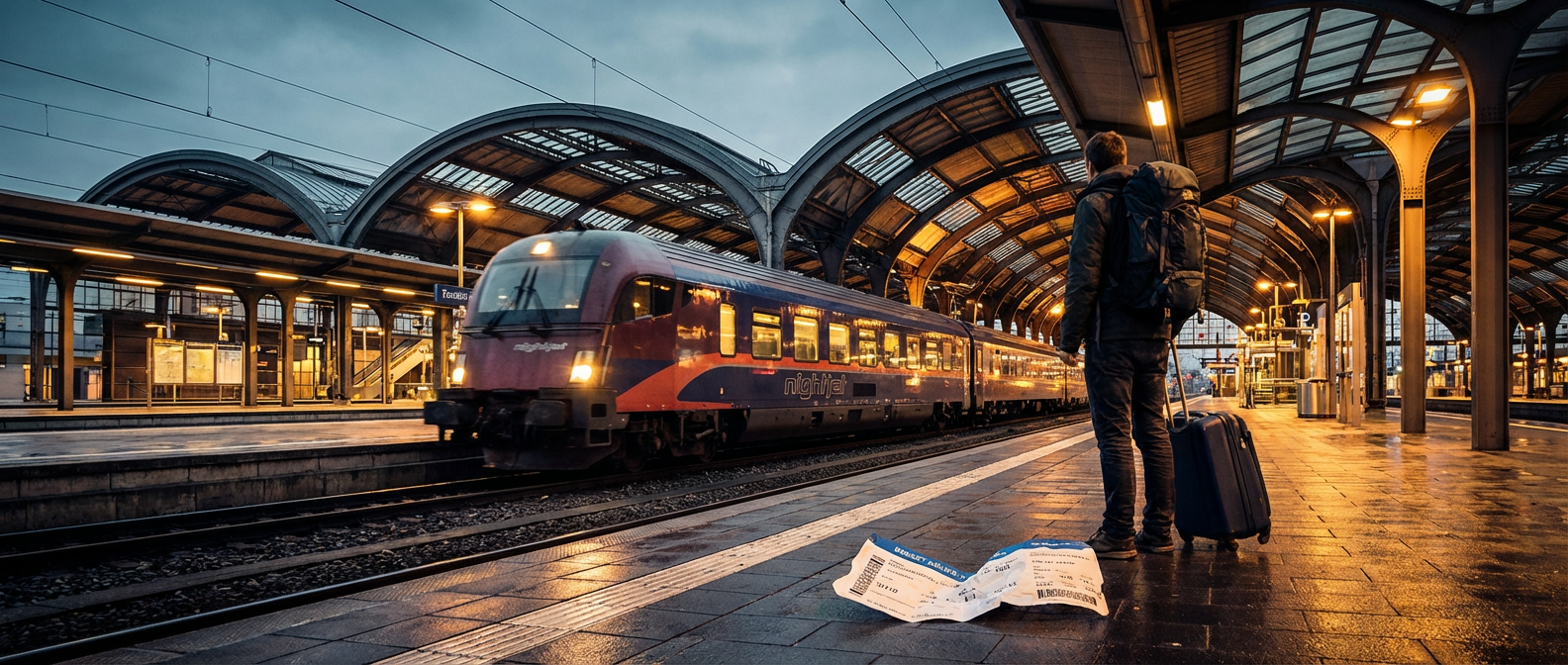
The math seemed too good. A couchette for €49 versus the usual €89 Ryanair flight plus another €30 in airport transfers and parking. But numbers don’t tell the whole story. What happened during those 847 miles of track wasn’t just transportation, it was a complete recalibration of how I think about moving through Europe.
I’ve spent three months this winter crisscrossing Central Europe, not as a week-long tourist but as someone trying to understand how this continent actually works when you slow down enough to see it. The night train revelation hit somewhere around the German border when I realized I wasn’t just getting from Point A to Point B. I was living in the space between.
The Real Economics of Night Travel
Let’s strip away the romance for a moment and talk logistics. Austrian Railways’ Nightjet network exploded to 24 routes by December, adding connections like Paris-Vienna and Stockholm-Berlin that seemed impossible just two years ago. Their 89% occupancy rates aren’t tourist fluff, they’re proof that people are genuinely choosing trains over planes.
I tracked every expense across my 847-mile journey network. The ÖBB Nightjet official route network and schedules shows pricing that consistently undercuts budget airlines when you factor in real costs. That Vienna-Paris connection saves you a hotel night, airport taxi fees, and the soul-crushing experience of 4 AM airport coffee.
The EU’s new Flight-Free incentive program launching January 2025 offers 30% discounts on international rail tickets for journeys under 1,500 kilometers. Translation: your Prague-Amsterdam trip drops to around €34. Meanwhile, Ryanair’s hidden fees keep multiplying like a hydra with a business degree.
But here’s what the spreadsheets miss. When you arrive by train, you’re already in the city center. Your hotel checkin isn’t until afternoon? No problem, you’ve been sleeping while moving. That’s not just cost savings; it’s time alchemy.
The Carbon Numbers That Actually Matter
I used to roll my eyes at carbon footprint evangelism until I saw the actual numbers. The European Environment Agency transport emissions database breaks down the Paris-Vienna route I took: 285kg of CO2 by plane versus 14kg by night train. That’s not marginal improvement, that’s a completely different category of impact.
Three months of train travel taught me something unexpected about environmental choices. It’s not about performative sacrifice or Instagram-worthy minimalism. When the sustainable option is genuinely better—more comfortable, less stressful, often cheaper—the choice becomes obvious rather than virtuous.
The SNCF booking platform recorded a 234% increase in international bookings from non-European travelers in 2024. Americans, Australians, and Canadians are discovering what Europeans forgot and are now remembering: night trains don’t just move you efficiently; they let you experience the actual geography between cities instead of viewing Europe as a collection of airport terminals.
What Actually Happens on a Night Train
Forget the Orient Express fantasy. Modern night trains are practical spaces that happen to cross borders while you sleep. My Prague-bound couchette looked like a compact ship cabin—functional, clean, with enough hooks and shelves for someone who travels with too many notebooks and charging cables.
The real magic happens in the dining car around 10 PM when solo travelers start gravitating toward shared tables. I met a Danish architect relocating to Prague, a German couple visiting family in Amsterdam, and a British journalist covering Central European politics. These weren’t forced hostel conversations but organic connections that happen when you’re all slightly displaced together.
By morning, rolling through Czech countryside with coffee and surprisingly decent pastries, I understood why occupancy rates hit 89%. This wasn’t nostalgic train tourism, it was practical travel that happened to be deeply pleasant. You wake up refreshed in a new country instead of dehydrated in an airport queue.
The Infrastructure Renaissance
What I witnessed across 847 miles wasn’t just better trains but entirely reimagined stations. Prague’s main terminal underwent massive renovations specifically to accommodate the new night services. Amsterdam Centraal added dedicated night train platforms with enhanced security and 24-hour facilities.
These aren’t vanity projects but strategic infrastructure investments that recognize how travel patterns are shifting. When booking platforms show triple-digit growth in international reservations, governments pay attention. The night train renaissance represents something larger: Europe rediscovering efficient land connections that make geographic sense.
The route expansion tells a story of political cooperation that extends beyond transportation. When Austria, Germany, France, and the Netherlands coordinate sleeper schedules, they’re basically rebuilding the continental connections that budget airlines fragmented into discrete airport hops.
My worn notebook now contains train schedules alongside restaurant recommendations and honest assessments of what worked versus what didn’t. After three months and 847 miles of track, I’m convinced that Europe’s night train revolution isn’t transportation nostalgia, it’s the future arriving right on schedule. Have you considered how your next European trip might look from platform level rather than 30,000 feet?