
The AI Price Predictor That Actually Works
Last fall, Google rolled out something that genuinely matters: an AI price prediction tool trained on trillions of historical fare data points. It tells you whether a ticket will get cheaper or more expensive in the next seven days. The accuracy sits around 85 percent, which means it’s not magic, but it’s close enough to stop you from panic-booking at 2am.

I’ve been testing this for three months. The thing is weirdly good at flagging when you should wait. Last December, I watched a flight to Barcelona flip from “price expected to rise” to “price expected to drop” over a Tuesday afternoon. I waited 48 hours. Saved $64. That’s groceries for a week when you’re living abroad on a shoestring.
But here’s where I’ll be honest: it doesn’t replace common sense. The tool works best when you have flexibility. If your dates are locked and you need to fly next Thursday, the AI can’t manufacture cheaper fares that don’t exist. What it does is eliminate the guessing. You’re not refreshing your browser 47 times wondering if you’re an idiot. You know.
Fare Locks and Hidden City Warnings: The Real Game-Changer
Google introduced something called Fare Lock on Google Flights this year, and it’s probably the most useful feature since saved trips. Book a ticket and hold the price for 24 hours without fully purchasing. This sounds small. It isn’t.
The hidden city ticketing warnings matter too. For those unfamiliar: sometimes booking a connecting flight and deplaning at the layover is cheaper than buying a direct ticket to that same city. It’s a loophole that’s existed forever. Airlines hate it. Delta and United updated their terms of service to basically say they’ll ban you for trying it. Google started flagging these routes in 2025, labeling them clearly so you know what you’re getting into.
I spent two weeks in Lisbon last spring partially because of a fare that routed through there cheaper than anywhere else I was actually trying to go. Now that strategy is visible but risky. The calculus has changed. You’re not accidentally gaming the system anymore. You’re choosing to.
Carbon Emissions Data That Actually Makes You Think Twice
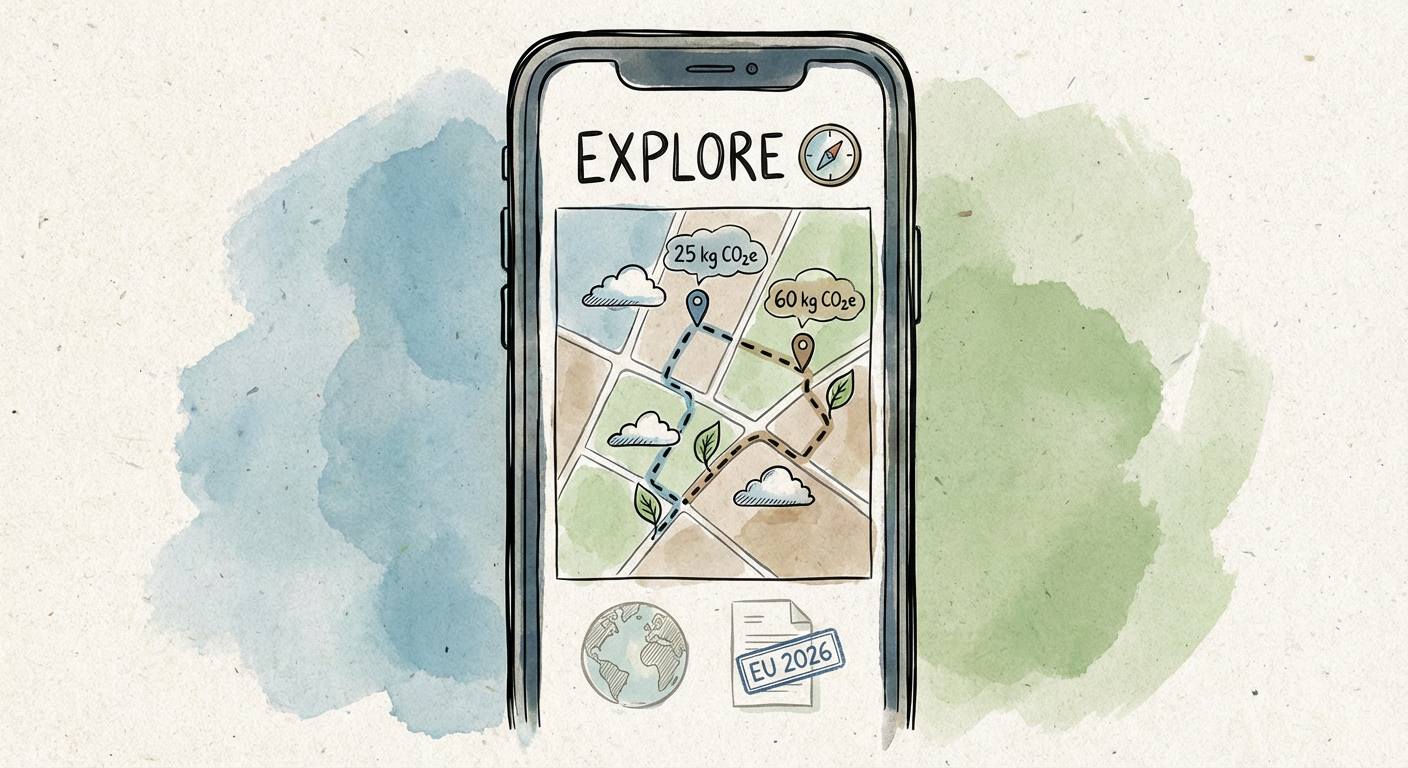
In January 2026, new EU digital transparency regulations kicked in. Google Flights started pulling real-time carbon emissions estimates from the ICAO Carbon Emissions Calculator. Now when you search for a route, you see the environmental impact of each airline option.
This one gets me. I’m not here to lecture anyone about flying being bad for the planet. But when you see that the direct flight to Berlin produces 18 percent less CO2 than the flight with a connection, you actually think about it. Sometimes you’ll pay $30 more for the greener option. Sometimes you won’t. At least now you’re choosing with actual information.
A 2025 NerdWallet survey found that 67 percent of travelers using fare prediction tools saved money on flights, averaging $87 per round-trip booking. The carbon data didn’t make that list because it’s hard to monetize. But after living in three European cities in the last 18 months, I can tell you that younger travelers especially are factoring this in.
What Actually Saves Money: Real Patterns, Not Gimmicks
Here’s what the data keeps confirming: Tuesday and Wednesday departures are cheaper than Sunday flights. The Hopper Airfare Index showed that the cheapest transatlantic fares from New York to London in early 2026 were mid-week departures, averaging $387 round-trip on budget carriers like Norse Atlantic and Level.
That’s not new. What is new is how accessible this information has become. You don’t need to read travel blogs anymore. The tools tell you. Google Flights shows you price trends across the entire calendar. You can see at a glance that Thursday is $150 cheaper than Saturday.
The bigger savings come from flexibility. Stay 6-12 weeks somewhere instead of 10 days. Find work. Eat where locals eat, not where Instagram tells you to. That’s where the real budget flying happens. The AI tools speed up the booking part. The staying part is where you actually save money.
The Honest Assessment
Google’s tools are better than they were a year ago. That matters. The price prediction is actually reliable. Fare Lock removes a specific anxiety. Carbon data is there if you care about it.
But none of this makes flying cheap if you’re stuck with inflexible dates, short availability, or routes with few competitors. Airlines know what you’re doing. They’ve gotten smarter about dynamic pricing. The 2026 versions of these tools work precisely because millions of people aren’t using them yet. That changes.
The honest travel hack is what it’s always been: go for longer, travel during shoulder seasons, stay patient with your search, and be willing to fly mid-week on budget carriers that nobody’s heard of. The AI makes all that easier to execute. But it can’t replace the willingness to actually go, to stay, to embed yourself somewhere and stop treating travel like something to consume.
What’s your flying strategy looking like for this year? Are you finding the AI predictions actually change your booking decisions, or are you discovering flight deals through methods the apps haven’t caught up to yet? I’m genuinely curious what’s working for people right now.