The Email That Made Me Rethink Everything About Connecting Flights
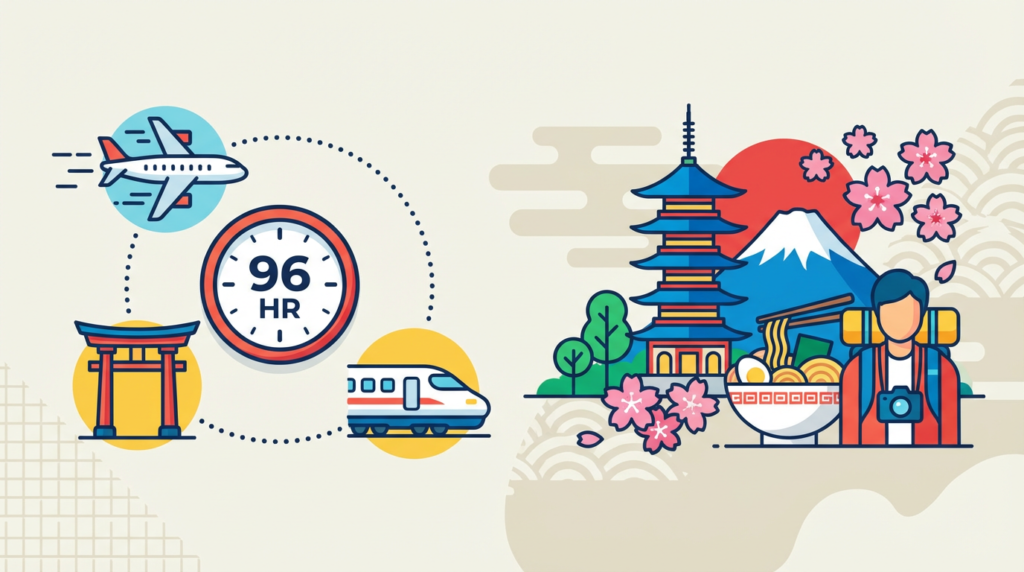
Last month, I got an email from my friend Sarah. She was flying from New York to Bangkok with a connection in Tokyo, and instead of the usual “pray the flight isn’t delayed” layover anxiety, she was asking about ramen shops in Shibuya. Japan had just launched their extended 96-hour transit visa program this past January, turning what used to be a rushed 24-hour airport dash into a legitimate four-day adventure.

I’ve been following this since the Japan National Tourism Organization transit visa guide first announced the changes. The numbers are wild. Narita and Haneda airports saw transit visa applications jump by 340% in just the first two months. That’s not a typo. Travelers from 68 countries can now turn their connecting flight into a proper Tokyo experience, as long as they have onward tickets to a third destination within four days.
Sarah’s question wasn’t really about ramen. It was about whether four days is enough time to get a real taste of Tokyo without feeling like you’re sprinting through a checklist. After walking her through my own 96-hour strategy, I realized this visa change is completely reshaping how we think about international travel.
Why Four Days Hits Different Than Four Weeks
Most Tokyo guides assume you have at least a week, maybe two. They’re written for people who can afford to wander aimlessly, discover hidden neighborhoods by accident, and recover from jet lag properly. The 96-hour transit visa demands a completely different approach. You need the intensity of a weekend city break with the cultural curiosity of a month-long immersion.
The sweet spot is picking two neighborhoods and actually living in them rather than checking off five districts superficially. I’ve learned this the hard way through multiple Tokyo trips. Your feet will thank you. More importantly, you’ll have actual memories instead of a blur of subway transfers.
Tokyo Metro clearly gets this shift. They’ve introduced special 4-day transit passes priced at ¥2,500, designed specifically for these extended layover travelers. The Tokyo Metro transit pass information shows they’ve mapped out suggested routes that maximize your time without the usual tourist trap shuffle. Smart move, considering transit visitors are spending an average of ¥45,000 during their stays according to Japan Tourism Agency data.
My Tested 96-Hour Tokyo Strategy
Day one is Shibuya and Harajuku, but not how you think. Skip the famous crossing photo op and head straight to the department store basement food courts in Shibuya. The depachika culture is where Tokyo’s food obsession actually lives. Grab lunch ingredients and eat them in nearby Yoyogi Park while watching the weekend performers and dog walkers.
Harajuku gets weird after dark in ways that daylight tourists never see. The vintage shops stay open late, and the street food vendors who avoid the Takeshita Street chaos set up along the quieter side streets. My notebook has at least six addresses for takoyaki stands that only locals seem to know about.
Day two through three should split between traditional Tokyo in Asakusa and modern Tokyo in Ginza or Roppongi. Asakusa works best in early morning when Senso-ji temple belongs to local worshippers rather than tour groups. The surrounding streets have shops that have been family-run for generations. They’re not trying to sell you anything specific, which makes discovering them feel like finding actual treasure.
Ginza is where you confront Tokyo’s reputation for being expensive and realize it’s more complicated than that. Yes, the department stores will empty your wallet. But the standing sushi bars hidden in building basements serve some of the city’s best fish at prices that make sense for a four-day splurge.
The Logistics That Actually Matter
Immigration at both Narita and Haneda has adapted quickly to the 96-hour visa surge. The lines move faster than they did six months ago, but you still want to factor in 45 minutes minimum for the transit visa process. Have your onward flight confirmation ready and a rough itinerary written down. They don’t need your minute-by-minute schedule, but showing you’ve thought beyond “I want to see Tokyo” speeds things up.
Luggage storage is the detail that makes or breaks the whole experience. Both airports have expanded their storage facilities, but book online in advance. Day-of storage hunting with four days of luggage is not how you want to start your Tokyo adventure. I learned this during my first extended layover when I spent two hours dragging a suitcase through Shibuya station.
The train from either airport into central Tokyo takes about an hour. Factor this into your timeline because Tokyo traffic doesn’t care about your connecting flight schedule. The IC card you buy for airport transport works throughout the city, so don’t overthink the metro pass situation until you’re actually navigating the subway system.
What Four Days Actually Teaches You
The 96-hour limit forces a kind of focused attention that longer trips sometimes lack. You notice details because you know your time is finite. The way salary workers line up for the same street cart every morning. How neighborhood convenience stores reflect their surroundings through product selection. The rhythm of Tokyo life that becomes invisible when you have weeks to figure it out.
I’ve done both the month-long Tokyo exploration and the four-day intensity sprint. They’re different experiences entirely, but the shorter timeframe taught me more about how the city actually functions. Longer trips let you become comfortable. Four days keeps you alert and curious.
The visa change represents something bigger than convenient layovers. It’s Japan recognizing that modern travelers want authentic experiences even within tight timeframes. The country has always been great at precision and efficiency. Now they’re applying that same approach to tourism.
Have you used the 96-hour transit visa yet, or are you planning a Tokyo layover strategy? I’m always curious about how other travelers approach the four-day challenge and what unexpected discoveries emerge when time constraints force you to dig deeper rather than cover more ground.