The Algorithm Called Bullshit on Paradise
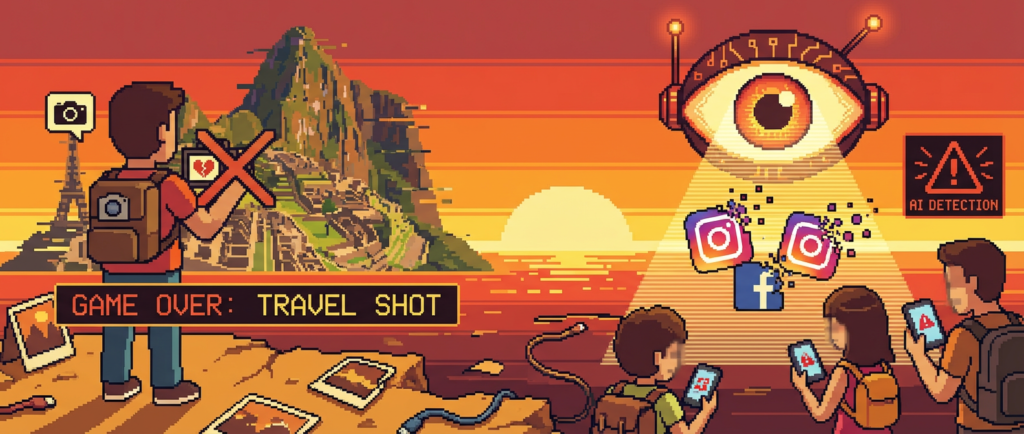
I was scrolling through my feed last week when I spotted it. A little gray warning label tucked beneath a friend’s Santorini sunset shot: “This image may contain AI-generated or significantly altered content.” The same photo that would have gotten three thousand likes two years ago now sat there, exposed and slightly embarrassing, like showing up to a party in last season’s trends.
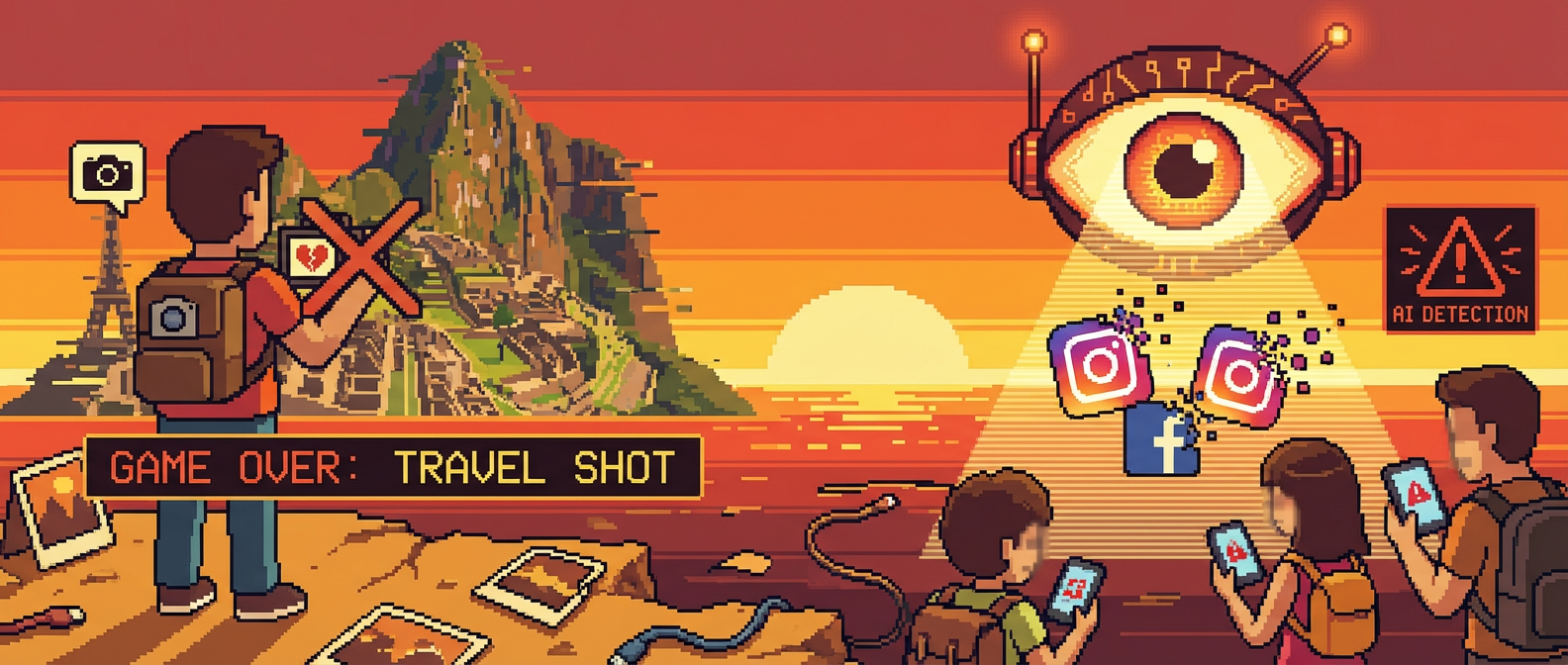
Since Instagram rolled out its AI detection system in September 2025, nearly a quarter of travel photos get flagged as potentially fake. That’s not a small correction. That’s an earthquake that’s reshaping how we document and sell travel experiences. The perfectly curated feed is dying, and honestly, it’s about time.
I’ve watched this shift happen in real time during my travels this year. The obsessive hunt for the perfect angle. The ring lights packed alongside sunscreen. The twenty-minute photo sessions blocking actual travelers from enjoying a viewpoint. All of that frantic content creation feels suddenly dated, like watching someone try to use a flip phone.
When Reality Doesn’t Match the Marketing
The numbers tell a brutal story about our digital travel fantasy land. A study from the NYU Social Media and Political Participation Lab found that two-thirds of popular travel destinations on Instagram rely heavily on AI enhancement or composite imagery. Two-thirds. That means most of what we’ve been using to plan our trips exists somewhere between reality and science fiction.
I experienced this disconnect firsthand in Iceland last fall. Every Instagram post showed the Northern Lights dancing in perfect green spirals above pristine landscapes. What I found instead were cloudy nights, muddy hiking trails, and exactly one glimpse of aurora that lasted maybe fifteen minutes. The gap between expectation and reality felt like falling off a cliff.
Tourism boards finally started acknowledging this problem. Iceland, New Zealand, and Norway launched “reality check” campaigns showing unfiltered destination photos. Gray skies. Crowded viewpoints. Weather that doesn’t cooperate with your vacation schedule. These campaigns feel revolutionary precisely because they shouldn’t be.
The Authenticity Arms Race
TikTok tried to solve this with verification badges for “authentic travel” content. Since January, they’ve awarded these badges to only twelve thousand creators worldwide. Twelve thousand, out of millions trying to document their journeys. The exclusivity says everything about how rare genuine travel content has become.
I applied for one of these badges after posting videos from my recent trip to Vietnam. Real morning markets with actual food vendors who didn’t speak English. Bus rides where the air conditioning broke down. Street food that gave me mild food poisoning but tasted incredible. The kind of travel moments that don’t fit neatly into a highlight reel but tell the actual story of being somewhere new.
Getting that verification felt like winning a prize for basic honesty. The bar has dropped so low that simply showing places as they actually exist counts as noteworthy content creation. We’re rewarding people for not lying, which tells you everything about where we’ve been.
The Money Trail Goes Cold
The business side of travel social media is imploding. Booking conversions from social media platforms dropped twenty-nine percent in the last quarter of 2025. People stopped trusting what they saw online enough to spend actual money on it. Hotels and destinations that built entire marketing strategies around impossibly perfect Instagram content are scrambling to figure out what comes next.
I’ve talked to several travel bloggers who’ve watched their sponsored content income disappear. Brands don’t want to pay for posts that might get flagged as artificially enhanced. The Instagram AI Transparency Guidelines basically killed the old influencer playbook overnight. No more impossible blue skies. No more beaches without a single other person. No more hotel rooms that look like magazine spreads.
The irony is that authentic travel content performs better now than the polished stuff ever did. My most engaged posts this year have been videos of delayed flights, terrible hostel WiFi, and the weird satisfaction of finding a perfect local breakfast spot after three failed attempts. People want real experiences, not advertising disguised as wanderlust.
What Comes After the Filter Dies
This shift feels bigger than just social media algorithm changes. We’re watching the end of performance-based travel, where the goal was creating content rather than having experiences. I’ve started leaving my phone in my bag more often. Taking notes in actual notebooks again. Paying attention to things that don’t photograph well but matter enormously to the quality of a trip.
The travel industry is adapting faster than I expected. Tour operators are emphasizing unpredictable experiences over guaranteed photo opportunities. Accommodations are marketing comfort and location over Instagram-ready aesthetics. Even guidebooks are making a comeback, valued for providing information rather than inspiration porn.
The death of the perfect travel shot might be the best thing that’s happened to actual travel in years. When you can’t fake it, you have to make it real. When the algorithm calls bullshit on artificial paradise, maybe we’ll start appreciating the imperfect beauty of places as they actually exist.
What’s your take on this shift? Have you noticed your own travel posting habits changing, or are you still trying to capture that perfect shot? I’d love to hear about your recent trips, especially the moments that were too real or too messy for traditional social media.